
ELECTIVE FILLER REFINEMENT
A RESET FOR UNWANTED HYALURONIC ACID FILLER
Sometimes the right aesthetic decision is to take something away. Elective filler dissolving uses an enzyme called hyaluronidase to break down hyaluronic acid filler when there is unwanted volume, migration, irregularity, or simply a change in aesthetic goals. Dissolving HA filler with hyaluronidase is an off-label use, and the process is not always perfectly predictable.
Before Your Appointment
Medical Clearance
Before treatment, all clients must complete a medical evaluation to review health history and confirm that treatment is appropriate. At Selah, medical clearance is renewed annually and should be updated with any significant changes to your health, medications, or medical history. A current clearance must be on file before treatment.
Know Your Filler History
If possible, bring information about what filler was used, where it was placed, how much was injected, and when treatment was performed. Previous treatment records or photos can be helpful.
Healthy + Bare Skin
Please arrive with clean, makeup-free skin and no active infection, rash, irritation, or open areas near the planned treatment site.

At Your Appointment
-
We’ll assess the area and talk through what you’re seeing, your previous treatment history, and what you hope to change.
-
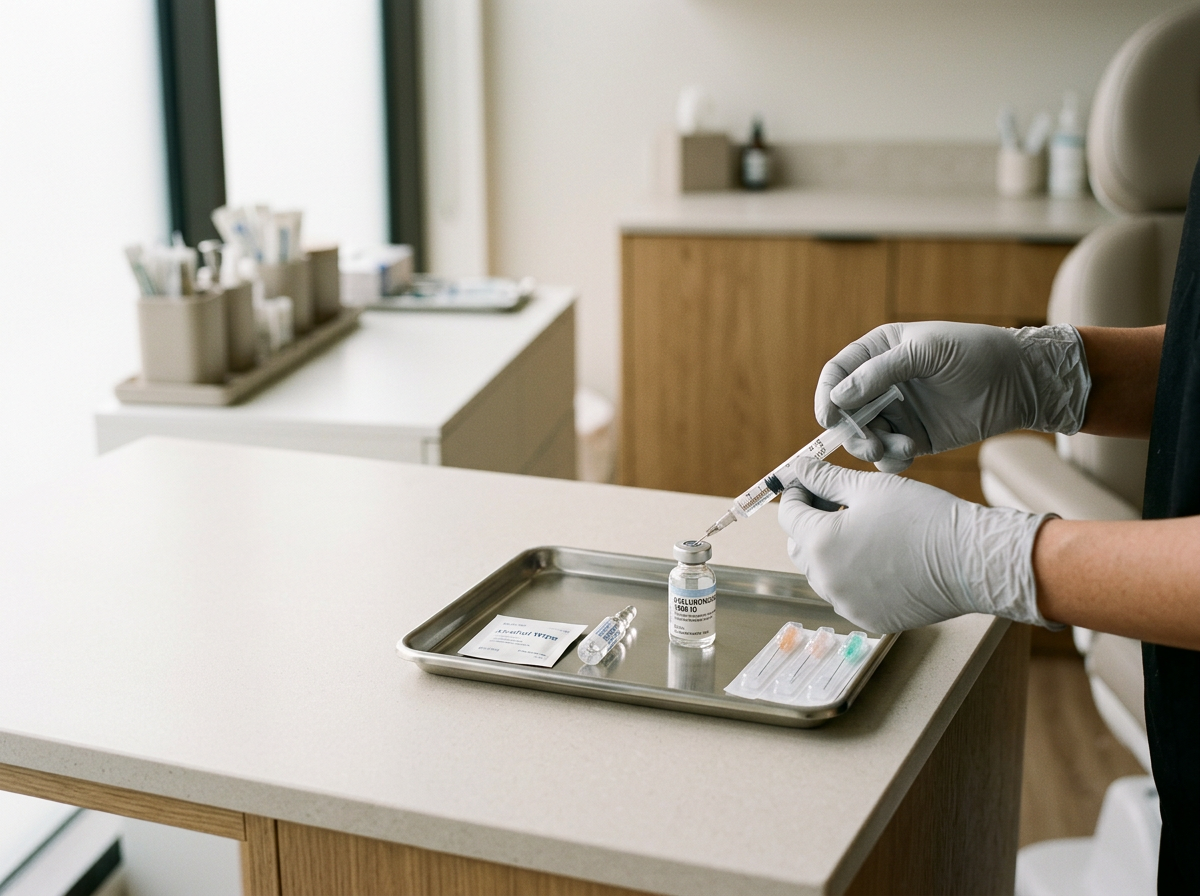
Hyaluronidase is injected into areas containing hyaluronic acid filler. Treatment may cause temporary stinging, swelling, or tenderness.
-
Elective dissolving is not always all-or-nothing. Because the enzyme can spread beyond the exact injection point, selectively removing a precise amount of filler can be difficult, and more than one session may be needed.
After Your Appointment
When To Contact Selah
Contact Selah for significant or worsening swelling, hives, difficulty breathing, increasing pain, or anything that feels unexpected.
Severe allergic symptoms require emergency medical attention.
The First Few Hours
Expect Some Swelling
Redness, tenderness, swelling, itching or mild bruising can occur after treatment. The area may temporarily look fuller before it begins to settle, this is completely normal and will generally improve in a few days.
Avoid Strenuous Activity + High Heat Activities
Avoid exercise and vigorous activities on the day of your treatment and for 24 hours after. Avoid hot yoga, saunas, steam rooms, and other high-heat activities until the swelling has resolved, normally up to 3-5 days.
Hands Off
Avoid rubbing, massaging, or applying firm pressure to treated areas, unless specifically instructed by your provider.
Avoid Alcohol
Avoid drinking alcohol for 24 hours because it can thin your blood and worsen bruising.
The First 24 Hours
Let the Area Settle
Hyaluronidase begins breaking down hyaluronic acid filler instantly, but post-treatment swelling can make the amount of remaining filler difficult to assess.
Stay Well Hydrated
Avoid alcohol for 24 hours, as it may increase bruising and swelling. Continue drinking plenty of water to support overall hydration while the treated area settles and recovers.
The First 3-5 Days
Reassessment + Additional Treatment
Results can begin to be evaluated around 72 hours after treatment. Depending on the amount, type, and location of filler being dissolved, more than one session may be needed to achieve the desired result.
The Next Couple of Weeks
Your Final Result Becomes Clearer
As swelling and bruising resolve, the treated area will become easier to evaluate. By around 10–14 days, you’ll have a clearer picture of your results. We’ll allow the tissues time to fully settle before determining whether additional dissolving or future aesthetic treatment is appropriate.
Your Questions, Answered
-
Hyaluronidase works on hyaluronic acid fillers. It does not precisely dissolve other filler materials such as calcium hydroxylapatite or poly-L-lactic acid.
-
Sometimes, but dissolving is not perfectly precise. Hyaluronidase can spread through the tissue and affect filler near the treatment area, which is why we take a conservative approach.
-
Possibly. The amount, location, age, and type of filler all influence how it responds. Some areas may require staged treatment.
-
Hyaluronidase begins breaking down hyaluronic acid filler immediately after injection, and you may notice a change within the first several hours. The enzyme continues acting over roughly the next 24–48 hours, although swelling from the treatment itself can temporarily make it difficult to tell how much filler has actually dissolved.
Not all fillers dissolve at the same rate. More highly cross-linked or resistant HA formulations may take longer to break down and may require additional hyaluronidase or more than one treatment session. The amount and type of filler, how long it has been present, and where it was placed can all influence the response.
While early changes can happen quickly, we generally allow the area to fully settle before judging the final result. By about 10–14 days, swelling has usually resolved enough to more accurately determine whether additional dissolving is needed.
-
Often, yes. Once the area has healed and stabilized, we can reassess whether future filler is appropriate and discuss timing.
-
No. Bruising, swelling, discomfort, and allergic reactions can occur. Your provider will review the potential benefits and risks before treatment.